 EN
 INA
Improving Older Adults’ Safety: Udayana University Nursing Community Service Team Conducts Choking Prevention and Nutritional Management Training in Angantaka Village General
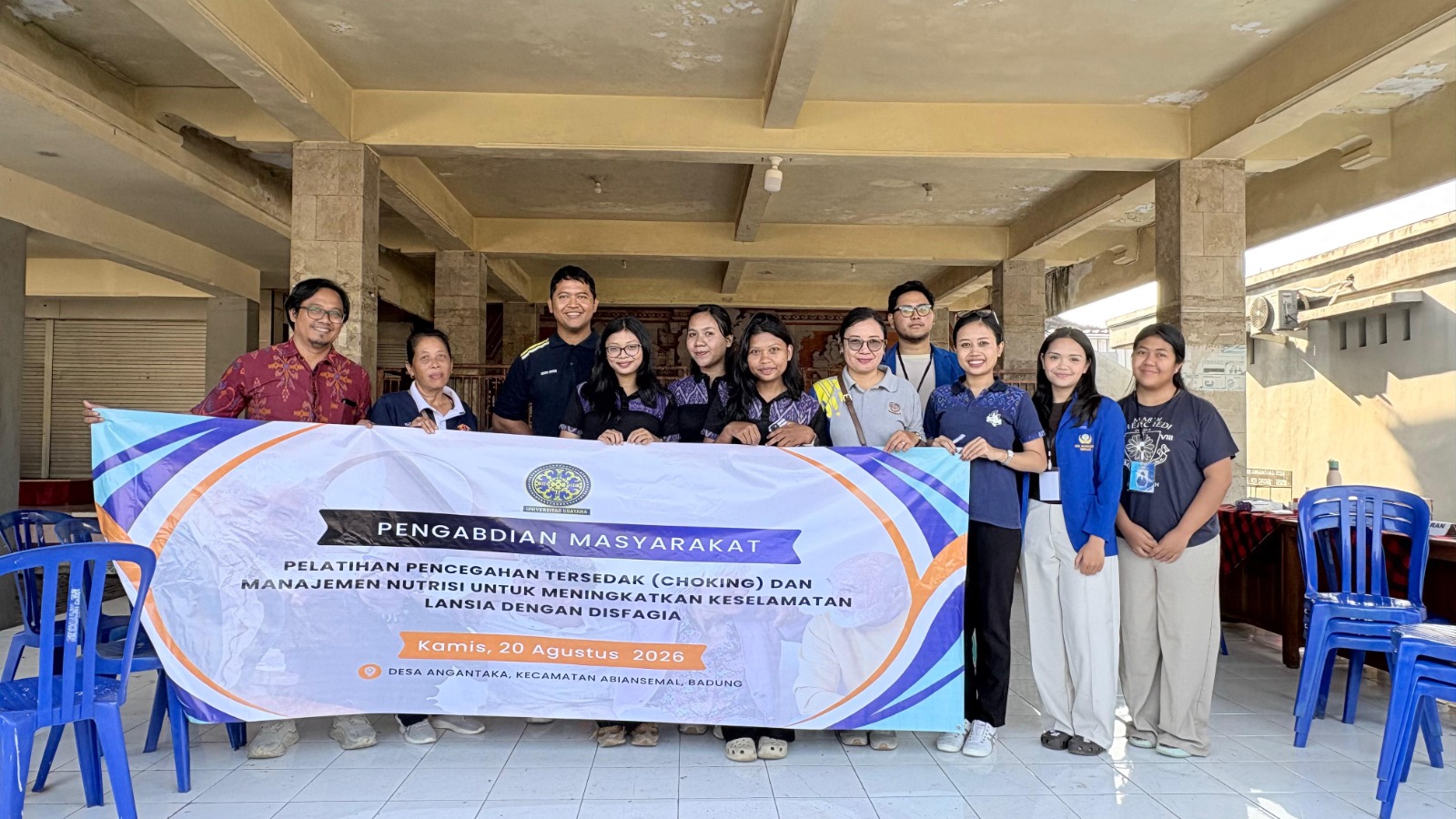
Badung, August 20, 2026 — The Community Service Team conducted a community outreach program entitled “Training on Choking Prevention and Nutritional Management to Improve the Safety of Older Adults with Dysphagia in Angantaka Village, Badung” on August 20, 2026. The program aimed to improve the knowledge and skills of older adults and community health cadres in preventing choking and applying safe nutritional practices, particularly for older adults who are at risk of swallowing difficulties or dysphagia.
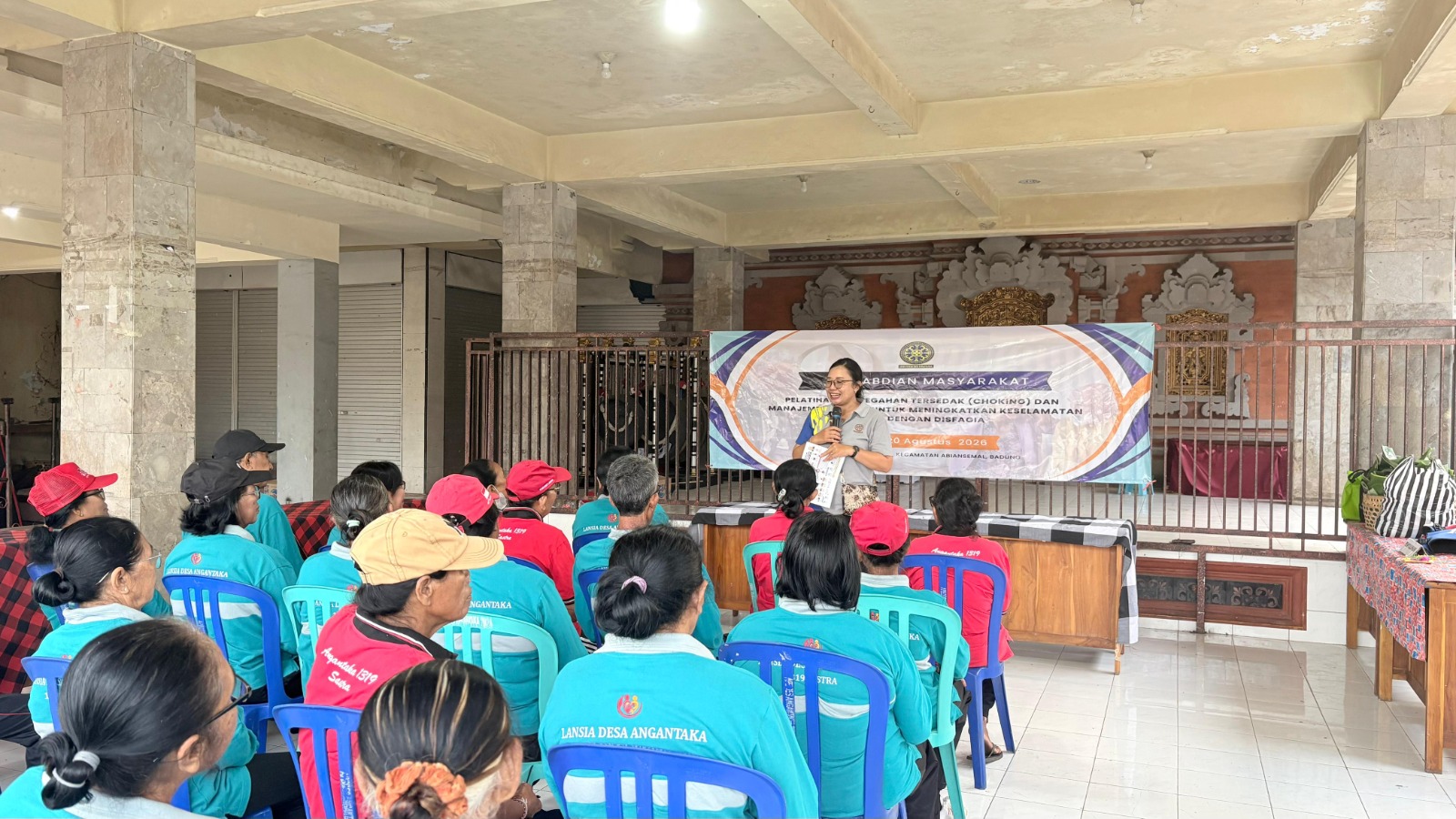
The activity was attended by 40 older adults and five elderly health cadres, with support from the Angantaka Village Government, the Head of Banjar Puseh, and the Chairperson of the Banjar Puseh Family Welfare Movement (PKK).
The program began with a group exercise session for older adults, followed by an educational session on safe nutrition for older adults delivered by the Program Coordinator, Dr. Ns. Putu Ayu Sani Utami, S.Kep., M.Kep., Sp.Kep.Kom. The session covered not only the importance of meeting nutritional requirements but also practical approaches to preparing food and beverages safely for older adults experiencing or at risk of swallowing difficulties.
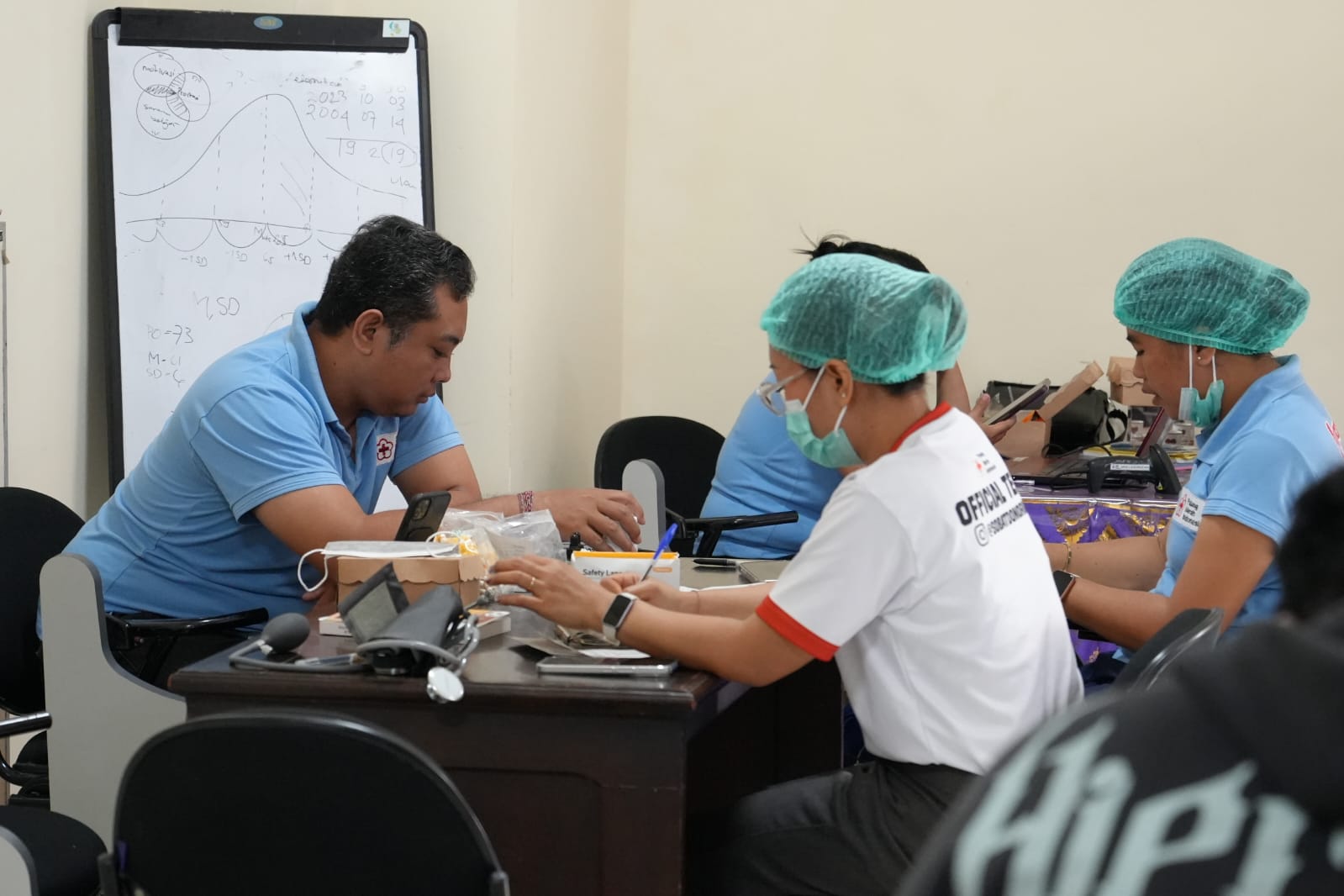
This was followed by training on choking prevention and management delivered by Dr. Ns. I Kadek Saputra, S.Kep., M.Erg. In addition to the educational sessions and practical training, participants received health assessments, including random blood glucose (RBG) testing, body weight and height measurements, and body mass index (BMI) assessments.
Early screening for dysphagia risk was also conducted using the Eating Assessment Tool-10 (EAT-10). Participants further completed knowledge assessments covering nutrition, choking risks, and choking prevention and management. The results of the health assessments and screening served as the basis for providing individualized health education tailored to each participant's condition.
To support the continued application of the knowledge gained during the program, participants received educational booklets on safe nutrition and choking prevention, as well as personal hygiene supplies. This initiative also aimed to strengthen the role of community health cadres in supporting the health and well-being of older adults within the community.
This community service program is expected to contribute to improving eating safety, nutritional adequacy, and the quality of life of older adults, while strengthening collaboration among educational institutions, local communities, community health cadres, and healthcare facilities at the community level.
Gallery
FACULTY OF MEDICINE UDAYANA UNIVERSITY